John Lloyd, Ph.D., CPE, ACTAR BMW MOA# 236695
Published in BMW Owner’s News, September 2025
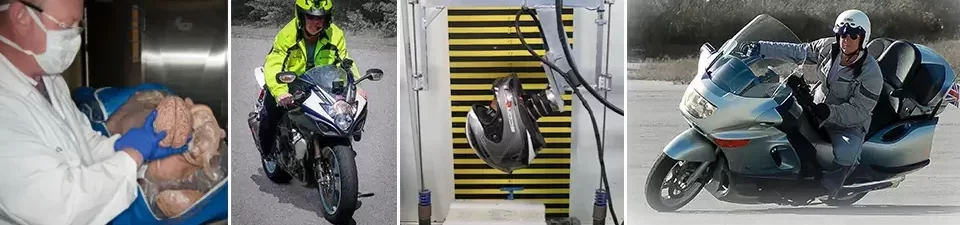
I am a motorcycle enthusiast and a biomechanics researcher specializing in head and brain injuries. Over the years, I have performed thousands of helmet impact tests. The following are my key takeaways for fellow motorcyclists, based on my extensive research into motorcycle helmets.
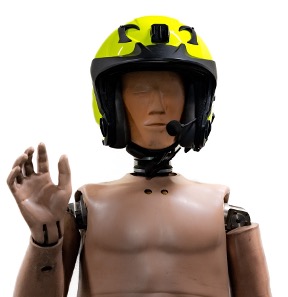
The most important purpose of any helmet is to prevent penetrating head trauma. In that way, modern motorcycle helmets are no different from ancient military helmets. Essentially, helmets serve as a second skull, thereby protecting the head against focal injuries.
Motorcycle helmets are the best protection we have against head and brain injuries. That said, research shows standard certified motorcycle helmets are only 37-42% effective in preventing fatal head injuries. Recent studies indicate that two-thirds of fatalities involving helmeted motorcyclists are due to traumatic brain injury.
There are two types of head and brain injuries, which are caused differently — focal injuries, including cuts, bruises, and skull fractures, are caused by translational (linear) forces. Whereas rotational brain injuries, including concussion, brain nerve damage, and brain bleeds, are caused by oblique impacts that produce angular forces. Translational and rotational forces are generated in every impact.
Most riders believe that the helmet is intended to protect the whole head, including the brain. This is not true. Standard motorcycle helmets are NOT designed to protect against rotational brain injuries.
My research shows that certified motorcycle helmets are highly effective in protecting against focal head injuries, due to their ability to absorb linear forces. On average, DOT-certified motorcycle helmets reduce the risk and severity of focal injuries by 92 percent and decrease the risk and severity of skull fractures by more than 80 percent.
Helmets that offer greater coverage, such as open-face and full-face helmets, provide the best protection against focal injuries. Whereas novelty (non-certified) helmets do not provide any significant protection against focal injuries. It is highly recommended that riders wear a certified motorcycle helmet at all times.
It should be noted that the DOT motorcycle helmet standard (FMVSS 218) does not require impact testing of the chin bar. Hence, there is no certified protection against facial injuries for full-face helmets tested only to the DOT standard. If facial impact protection is crucial to you, make sure your helmet is certified to both the DOT and ECE or Snell standards.
I recently completed an extensive study of the biomechanical protection afforded by 35 motorcycle helmet models. This is the most extensive comparative evaluation of motorcycle helmets published to date.
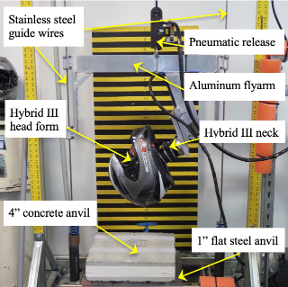
My research also indicates that standard certified motorcycle helmets do not provide protection against rotational brain injuries. In fact, a standard motorcycle helmet will actually increase the rider’s risk of concussion, nerve damage (axonal injury), and brain bleeding (subdural hemorrhage) by an average of 30 percent, compared to an unhelmeted head impact. This is because helmets increase the size and weight of the helmeted head, thereby generating greater impact-related rotational forces on the brain.
What can a safety-minded rider do to minimize their risk? Revised motorcycle helmet standards are starting to address the risk of brain injury. The new ECE 22.06 and Snell M2025 standards include an oblique impact test to measure the risk of rotational brain injury. Unfortunately, the current passing threshold equates to a 23% risk of neurologically devastating or potentially fatal rotational brain injury at a moderate impact speed of 17.5 mph. My research shows that the methods employed to assess brain injury risk in these new standards are flawed.
My recommendation is to choose a helmet that meets either the ECE 22.06 or Snell M2025 standard, in addition to the motorcycle helmet standard required in your country. Choose a lighter, smaller helmet with the desired coverage over a larger, heavier helmet. Not only will this likely provide better protection against rotational brain injuries, but will also generate less wind resistance and be more comfortable on those longer rides. Consider helmets that incorporate new technologies intended to reduce the risk of rotational brain injuries. Ultimately, don’t buy a helmet just based on aesthetic appeal; buy based on fit and protective performance.
What can motorcycle helmet manufacturers do to improve helmet performance? Current motorcycle helmet designs may be over-engineered to reduce translational forces that cause focal head injuries. This results in helmets that are larger and heavier, thereby increasing the risk of rotational brain injuries, which are the primary cause of fatality in two-thirds of helmeted motorcycle crashes. Protection against focal injuries is essential but needs to be balanced against the increased risk of rotational brain injuries. Manufacturers should evaluate materials that allow the development of smaller and lighter helmets.
For additional information, please download my latest research paper on motorcycle helmets: Lloyd J. (2025). Traumatic Brain Injuries in Helmeted Motorcycle Crashes. STAPP Car Crash Journal 69(1):162-180 / SAE 2025-22-0006 https://doi.org/10.4271/2025-22-0006, or email me for a copy.
My next goal is to compare helmets intended for various activities, including motorcycling, skiing, bicycling, American football, and hockey. Initial results suggest that, due to their smaller size and lighter weight, bicycle helmets outperform motorcycle helmets in terms of protection against rotational brain injuries, while also being effective in reducing focal injuries. However, bicycle helmets do not offer protection against penetrating head trauma, due to their open structure, and their effectiveness at higher impact speeds is unknown.
An opportunity exists to learn from this observation and other findings from my studies. If other motorcycle researchers or helmet manufacturers wish to collaborate on the development of advanced motorcycle helmets that protect against focal and rotational head and brain injuries, please contact me.
John Lloyd