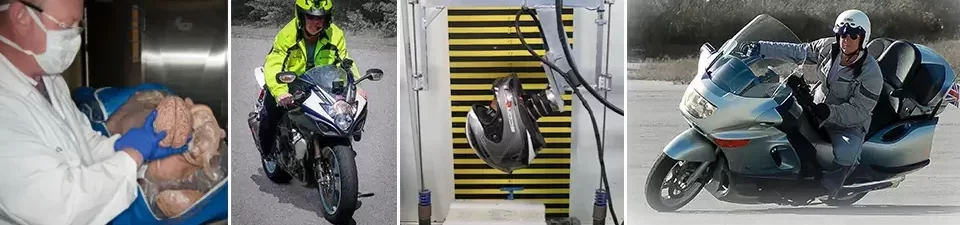
Dr. John Lloyd is pleased to announce that his latest research on Motorcycle Accident Biomechanics was published in the Journal of Forensic Biomechanics on January 25th, 2016.
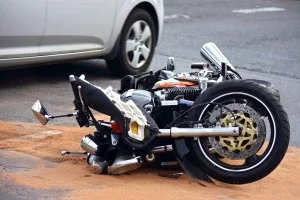
Abstract:
Motorcycles are a luxury in the developed world, where they are used mostly for recreation. Whereas in developing countries, motorcycles are required for utilitarian purposes due to lower prices and greater fuel economy. It is estimated that in 2016 there will be more than 134 million motorcycles worldwide, 60-80% of which are in the Asia Pacific and Southern and Eastern Asia regions. In 2011 there were more than 8.2 million registered motorcycles in the United States, representing 3% of all US registered vehicles, with California, Florida and Texas leading the number of motorcycles per state.
In the United States motorcyclists travelled 18.5 billion miles in 2011, which represents only 0.6% of total vehicle miles travelled, yet motorcyclists accounted for 14% (4,612) of traffic fatalities and 4% (81,000) of all occupant injuries 2. According to the U.S. National Highway Traffic Safety Administration (NHTSA), when compared with automobiles, per vehicle mile traveled, motorcyclists’ risk of a fatal crash is 35 times greater than that of a car occupant
In a motorcycle accident, the motorcycle and rider typically become independent, each following their own path to final rest. Consequently, the biomechanical analysis of a motorcycle accident is complex. A biomechanical model to assess rider kinematics associated with motorcycle accidents is presented, which may be important to forensic scientists involved in the analysis of such events. This model can also be applied to other activities, including cycling, equestrian sports, skiing, skating, running, etc.
It is first important to understand the mechanisms by which a rider may be ejected from their motorcycle and how drag factors affect the motorcycle and rider independently. Next we determine rider trajectory, taking into consideration rider anthropometry and posture, results from which are used to derive impact velocity as a function of linear and angular components. A case study is presented, demonstrating how the presented model can be applied to a collision involving a single motorcycle.